
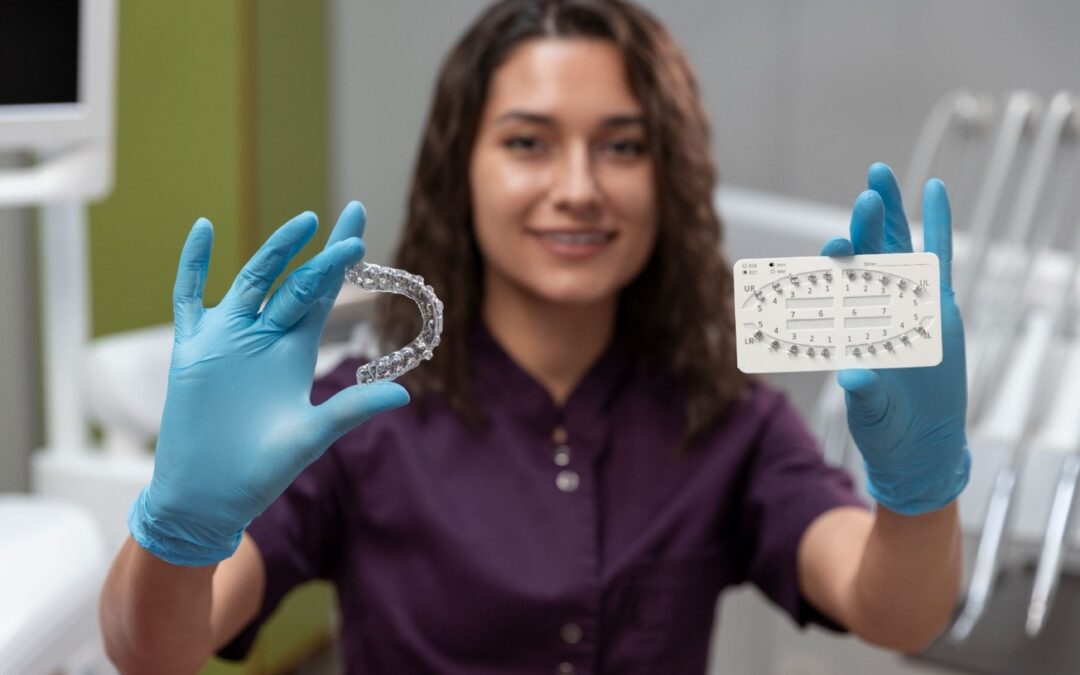
Adults who are thinking about straightening their teeth usually have one big question: are Invisalign clear aligners or traditional braces the better choice?
The honest answer: it depends on your teeth, your lifestyle, and your goals.
If you live or work near 3200 Bristol Rd in Bensalem, PA, you also have another advantage. You can get a clear, customized recommendation from a team that offers both orthodontics and facial aesthetics in one place. That means your new smile and your overall facial balance are planned together, not in separate silos.
Invisalign vs Braces for Adults: Quick Overview
Before you commit to months (or years) of treatment, it helps to understand what you’re really choosing between.
What Invisalign Is
Invisalign uses a series of clear plastic trays (aligners) that gradually move your teeth. You change trays every 1–2 weeks, and each one moves your teeth a little closer to the ideal position.
Key points:
- Nearly invisible
- Removable (for eating, drinking anything but water, and brushing)
- Smooth plastic edges instead of brackets and wires
- Works best when worn 20–22 hours per day
At Ideal Smile Dental in Bensalem, this is offered as Invisalign Clear Braces.
What Traditional Braces Are
Braces use small brackets attached to each tooth with an archwire that applies steady pressure to move your teeth.
Key points:
- Fixed to your teeth. You can’t remove them
- Metal or ceramic (tooth-colored) options
- Adjusted at regular in-office visits
- Very versatile for simple to complex orthodontic problems
Key Factors Adults Care About
Most adults who come in for a consult are focused on a few big questions:
- How noticeable will it be?
- How long will it take?
- How much will it cost?
- How will it affect my daily life and work?
- Is one option better for my specific bite or crowding?
Let’s break those down.
Appearance: Which Is More Discreet?
For many adults, especially those in client-facing or professional roles, this is the deciding factor.
Invisalign
- Clear, thin plastic trays that fit snugly over your teeth
- Most people won’t notice them in conversation or photos
- No brackets, wires, or colored bands
- Slight shine on the teeth is usually the only giveaway
Invisalign is often the first choice for:
- Professionals who speak or present often
- People in sales, hospitality, or on-camera roles
- Adults who simply don’t want the “braces” look again
Braces
- Metal braces are visible, even from a distance
- Ceramic (clear) braces blend more with tooth color but are still noticeable
- Food can occasionally get caught around brackets, which some adults dislike
If discretion is your top priority, Invisalign usually wins.
Comfort: What Does It Actually Feel Like?
Any tooth movement will cause some pressure and tenderness. But how it feels day-to-day can be very different.
Invisalign
- Smooth plastic: fewer issues with cuts or sores on the cheeks and lips
- Tightness for a day or two when switching to a new tray
- No emergency visits for broken brackets or poking wires
Braces
- Brackets and wires can rub against the inside of your lips and cheeks
- You may need dental wax early on to protect sore areas
- Adjustments every 4–8 weeks can cause a few days of tenderness
- Wires sometimes loosen or break and may require extra visits
If you have a low tolerance for irritation or have had trouble with braces in the past, Invisalign is often more comfortable.
Treatment Time: Which Is Faster?
Many adults hope Invisalign is “faster” than braces. In real practice, it’s more nuanced.
- Mild to moderate crowding or spacing: treatment times with Invisalign and braces are often similar.
- Complex bite problems or large tooth movements: braces sometimes move teeth more efficiently.
Your total time depends on:
- How complex your case is
- Whether you need bite correction, not just straighter teeth
- Whether you consistently wear your aligners 20–22 hours a day
Inconsistent Invisalign wear is one of the most common reasons treatment runs longer than planned. With braces, compliance is less of an issue because you can’t take them off.
Daily Life and Maintenance
Eating and Drinking
- Remove aligners to eat and drink anything except plain water
- No food restrictions. You can eat popcorn, nuts, crusty bread, etc.
- Must brush or rinse before putting aligners back in, especially after coffee, wine, or dark sauces, to avoid staining
Braces
- Food restrictions to avoid damage: no very hard, sticky, or chewy items
- Extra care with crunchy foods (cut apples, carrots into smaller pieces)
- Higher risk of food trapping around brackets and wires
If you love crunchy food or don’t want to change your diet, Invisalign has a clear lifestyle advantage.
Oral Hygiene
- Remove trays, brush and floss as normal
- Clean aligners daily with lukewarm water and recommended products
- Less risk of plaque build-up around brackets or white-spot lesions if you keep good hygiene
Braces
- Brushing and flossing take more time and careful technique
- You’ll likely use floss threaders or water flossers to clean around wires
- More prone to staining around brackets if brushing is rushed or inconsistent
For adults who already struggle to fit flossing into a busy day, Invisalign often makes hygiene more realistic.
What Can Each Option Treat?
Not every smile is a good candidate for aligners alone. Your dentist or orthodontist will evaluate:
- Crowding or spacing
- Overbite, underbite, crossbite, or open bite
- Tooth rotations
- Past dental work (crowns, implants, bridges)
- Gum and bone health
Invisalign Is Usually Best For:
- Mild to moderate crowding or spacing
- Mild overbite or crossbite
- Relapse after childhood braces
- Patients who are responsible and will wear trays as directed
Braces May Be Better For:
- More severe crowding or spacing
- Significant bite corrections (especially vertical changes)
- Complex rotations or tooth movements
- Patients who know they might struggle with wearing removable aligners consistently
A good rule: the more complex your bite problem, the more likely braces may be recommended or combined with other orthodontic tools.
Cost: Invisalign vs Braces
Costs vary depending on how complex your case is and how long treatment takes, but generally:
- Invisalign and braces are often in a similar price range for mild to moderate cases.
- More complex or longer treatments, whether with aligners or braces, usually cost more.
- Many dental plans offer some orthodontic coverage for adults, but it’s highly policy-specific.
At a practice like Ideal Smile Dental in Bensalem, the team can review:
- Your x‑rays and photos
- Your insurance benefits
- Payment plan options
A quick consultation is usually the only way to get a realistic estimate for your specific case.
Real-World Scenarios: Who Typically Chooses What?
To make this more concrete, here are a few examples we see often.
Scenario 1: Busy Professional in Her 30s
- Mild crowding on the bottom teeth
- Speaks with clients all day in person and on Zoom
- Attends social events often and doesn’t want visible metal
Best fit:
- Invisalign Clear Braces — discreet, minimal impact on speaking, easy to remove for important events (as long as she keeps total wear time consistent).
Scenario 2: 45-Year-Old with Significant Crowding
- Teeth crowded and rotated
- Bite is off and occasionally causes jaw fatigue
- Wants a durable, predictable solution and doesn’t mind a more traditional look
Best fit:
- Likely traditional braces, possibly ceramic for a less visible option. Braces may allow more precise control for his more complex case.
Scenario 3: Adult Considering Overall Smile and Facial Aesthetics
- Has mild spacing and wants a straighter smile
- Also interested in smoothing frown lines and enhancing lip shape once teeth are aligned
Best fit:
- Invisalign to align teeth, then Botox & Neurotoxin, Botox and Dermal Fillers, and Lip Filler at the same Bensalem/Philadelphia location for a cohesive, natural result.
How Invisalign Pairs with Aesthetic Treatments
Many adults want their whole smile and facial features to look refreshed and balanced.
At a combined dental and aesthetic clinic in Bensalem, PA, you have access to:
- Botox Bensalem PA
Ideal for softening forehead lines, frown lines, and crow’s feet that may feel more noticeable once you’re smiling with straighter teeth. - Dermal fillers Bensalem PA
Helpful for restoring volume in areas like the cheeks or nasolabial folds (smile lines), which can subtly enhance how your smile looks in profile and from the front. - Lip fillers Bensalem PA
Once teeth are aligned and your bite is stable, Lip Filler can refine lip shape, definition, and symmetry for a polished, natural-looking smile. - Microneedling Bensalem PA
Microneedling treatments can improve skin texture, acne scars, and fine lines so your complexion matches the quality of your new smile. If hair thinning is a concern, PRP Microneedling Hair Loss Treatment in Philadelphia is also available.
Because these services are coordinated under one team at Facial Aesthetic Treatments in Philadelphia, your plan can be sequenced properly:
- Align teeth (Invisalign or braces)
- Whiten if desired using Teeth Whitening in Bensalem, PA
- Refine gum shape if needed with Gum Contouring
- Complete facial aesthetics (Botox, fillers, lip filler, microneedling)
This stepwise approach creates a refreshed, natural result instead of a “done” look.
Invisalign vs Braces: A Side-by-Side Comparison
| Factor | Invisalign Clear Aligners | Traditional Braces |
| Visibility | Almost invisible | Metal is noticeable; ceramic is less obvious |
| Comfort | Smooth plastic, minimal irritation | Brackets/wires can irritate cheeks/lips |
| Removability | Removable for meals and brushing | Fixed; only dentist removes |
| Food Restrictions | None (aligners removed to eat) | Avoid very hard, sticky, chewy foods |
| Oral Hygiene | Brush/floss normally with aligners out | More challenging; requires extra time and tools |
| Ideal For | Mild–moderate crowding/spacing, motivated adults | Simple to complex cases, larger bite corrections |
| Dependence on Compliance | High must wear 20–22 hours/day | Low |
| Emergency Repairs | Rare (aligner lost or cracked) | Broken brackets/wires may need urgent visits |
Who Is Not a Good Candidate for Invisalign?
Invisalign might not be the right choice if:
- You know you’ll struggle to wear aligners 20–22 hours daily
- You frequently lose or misplace small items
- Your bite problem is complex, and your dentist or orthodontist advises braces
- You have active gum disease or untreated decay (these need addressing first)
Even in these cases, Invisalign might be part of a combination plan, but it’s not always the primary tool.
What to Expect at a Consultation in Bensalem
If you schedule a visit with Trusted Dentist in Bensalem, PA | Ideal Smile Dental, you can expect:
- Comprehensive exam – evaluation of teeth, gums, jaw joints, and bite (Routine Dental Check-Ups in Bensalem for Preventive Care help catch other issues early).
- Photos and digital scans or impressions – to map out your current alignment.
- Clear explanation – of what Invisalign or braces could realistically achieve in your case.
- Timeline and cost estimate – including what your insurance may cover and any available Dental Specials & Offers.
- Discussion of aesthetic goals – including whether you’re also considering Botox and Dermal Fillers, microneedling, or lip filler to complement your smile.
From there, you can decide whether to:
- Go with Invisalign Clear Braces
- Choose traditional braces or another orthodontic option
- Or begin with foundational care, such as Dental Cleanings in Bensalem, PA, and Dental Exams in Bensalem, PA, before orthodontics
FAQs: Invisalign vs Braces for Adults
1. Are Invisalign results as good as braces for adults?
For many mild to moderate alignment issues, Invisalign can achieve results comparable to braces when treatment is properly planned, and aligners are worn as directed. For more complex bite corrections, braces sometimes offer more control. An individualized exam is the only way to know which system can deliver the best result for your mouth.
2. Am I too old for Invisalign or braces?
Age alone is not a limiting factor. As long as your gums and bone are healthy enough to support tooth movement, adults in their 40s, 50s, and beyond can have very successful orthodontic treatment. If you have missing teeth, implants, or previous dental work, your dentist will factor that into your treatment plan.
3. Will Invisalign affect my speech?
Most adults notice a slight lisp for a few days when they first start Invisalign or when they change into a new tray. This usually improves quickly as your tongue adapts. Practicing speaking, reading aloud, and staying consistent with wearing your aligners helps your speech normalize faster.
4. How often do I have to visit the dentist with Invisalign vs braces?
With Invisalign, appointments are often spaced out a bit more, typically every 6–10 weeks, to check progress and give you your next set of trays. With braces, visits are usually every 4–8 weeks for adjustments. Both options do require regular supervision; “mail-order” aligners without in-person exams carry higher risks.
5. Can I switch from braces to Invisalign later?
In some cases, yes. Some adults start with braces for more complex early movements and then transition to Invisalign for finishing and fine-tuning. This is not always necessary, but it can be helpful in specific situations. Your provider can explain whether a hybrid approach makes sense for you.
6. Will my insurance cover Invisalign or braces as an adult?
Some dental plans include adult orthodontic benefits, but not all. Coverage amounts and rules for Invisalign versus braces vary by plan. The team at Ideal Smile Dental can review your insurance, explain your benefits, and outline payment options so you have a clear picture before you start.
7. Do I need retainers after Invisalign or braces?
Yes. No matter which treatment you choose, retainers are essential to keep your teeth from shifting back. Most adults wear retainers full-time for a short period and then transition to nighttime wear only. Skipping retainers is one of the most common reasons people need orthodontic treatment again later in life.
8. Can I combine Invisalign with Botox, fillers, or microneedling?
Absolutely. Many adults straighten their teeth with Invisalign and then refine their overall facial appearance with Botox Bensalem PA, dermal fillers Bensalem PA, lip fillers Bensalem PA, or microneedling Bensalem PA. Planning these treatments together at a combined dental and aesthetic clinic Bensalem PA helps you achieve a harmonized, natural look.
Ready to Decide Between Invisalign and Braces?
Choosing between Invisalign and braces becomes much easier when you have a team that looks at your smile and your overall facial aesthetics together. At Ideal Smile Dental, every treatment plan is built around your goals, your lifestyle, and the result you actually want to see in the mirror.
A personalized consultation gives you clarity, not guesswork. You’ll walk away knowing exactly which option fits your teeth, timeline, and daily routine, along with how to enhance your results with complementary aesthetic treatments if you choose.
With Ideal Smile Dental, you get:
- Customized Invisalign and braces treatment plans tailored to adult patients
- Advanced diagnostics for precise, predictable results
- A combined dental and facial aesthetics approach for a balanced look
- Flexible payment options and insurance guidance
- Ongoing support to keep your treatment on track and comfortable