
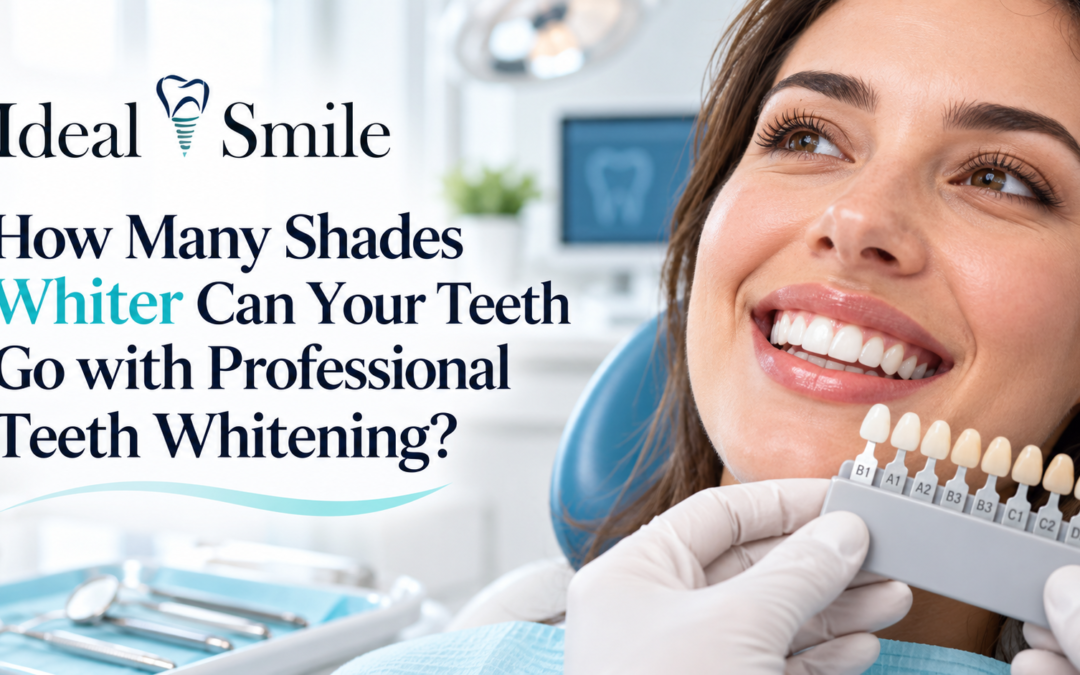
Professional teeth whitening can lighten your teeth by several shades, although the exact results depend on your natural tooth color, the type of discoloration, and the whitening treatment used. Some patients notice a substantial difference after treatment, while others may see a more gradual or modest improvement.
If you are considering professional teeth whitening, understanding what affects your results can help you set realistic expectations and choose an appropriate treatment for your smile.
How Many Shades Whiter Can Your Teeth Go with Professional Teeth Whitening?
Professional teeth whitening can often lighten natural teeth by several shades. However, there is no single number that applies to every patient. Your starting tooth shade, stain depth, enamel characteristics, and the whitening method all influence the final result.
Dentists use tooth shade guides to assess color before and after treatment. These guides help compare the original shade with the shade achieved after whitening. The comparison provides a more consistent way to evaluate results than relying on photographs or visual impressions alone.
Several factors influence how much brighter your teeth may become:
- Starting tooth shade: Teeth with mild yellow discoloration may respond differently from teeth with deeper or more pronounced staining.
- Type of discoloration: Surface stains caused by coffee, tea, or certain foods may respond differently from discoloration originating within the tooth.
- Whitening method: Professional treatments and at-home products differ in their ingredients, application methods, and treatment schedules.
- Tooth condition: Enamel characteristics, existing dental concerns, and previous dental work can affect the recommended approach.
- Individual response: Patients may experience different results even when they receive similar treatments.
Your dentist can assess these factors and explain what level of whitening may be realistic for you. Rather than aiming for a specific number of shades, focus on achieving a brighter appearance that suits your natural teeth and smile goals.
How Does Professional Teeth Whitening Work?
Professional teeth whitening uses bleaching agents, commonly hydrogen peroxide or carbamide peroxide, to break down the molecules responsible for many types of tooth discoloration. This chemical process helps reduce the appearance of stains and makes natural teeth look brighter.
The treatment approach depends on your dental condition, the degree of discoloration, and your desired outcome.
Surface Stains vs. Deeper Tooth Discoloration
Not all tooth stains develop in the same way. Understanding the difference can help explain why whitening results vary.
Surface stains (extrinsic stains) develop on the outer tooth surface. Common causes include coffee, tea, red wine, tobacco, and certain foods. These stains may respond well to professional cleaning and whitening, depending on their severity.
Deeper discoloration (intrinsic stains) develops within the tooth structure. Aging, certain medications, dental trauma, and changes within the tooth can contribute to this type of discoloration. Some intrinsic stains are more difficult to lighten and may require a different cosmetic approach.
A dental examination can help identify the likely cause of discoloration and determine whether whitening is an appropriate option.
How Is Professional Whitening Different from Regular Toothpaste?
Whitening toothpastes generally help remove surface stains through polishing ingredients, while professional whitening treatments use bleaching agents to change the appearance of discoloration in natural teeth.
Professional treatment also allows a dentist to evaluate your teeth and gums before recommending an approach. This is particularly helpful if you have tooth sensitivity, existing restorations, or stains that have not improved with regular brushing.
The goal is to choose a suitable treatment based on your oral health and smile goals, rather than assuming that a stronger whitening product will automatically produce better results.
6 Factors That Determine How White Your Teeth Can Get
Professional teeth whitening can produce noticeable changes, but the final shade depends on several factors. Understanding these differences helps you develop realistic expectations and choose a treatment that suits your dental needs.
1. Your Natural Tooth Color
Your natural tooth shade influences how much your teeth may lighten during treatment. Some people naturally have teeth with a more yellow undertone, while others have grayish or darker shades.
Teeth with yellow discoloration often respond more predictably to peroxide-based whitening than some types of gray or brown discoloration. However, individual results vary, and your dentist can help estimate what to expect after examining your teeth.
2. The Type of Tooth Stains
The cause of your discoloration can affect your teeth whitening results. Surface stains from coffee, tea, red wine, and tobacco may respond well to whitening. Discoloration that develops inside the tooth can be more difficult to treat.
Certain stains associated with dental trauma, medications, or changes in tooth structure may respond less predictably. Your dentist in Bensalem can assess the type of staining and explain whether professional whitening is likely to help or if another cosmetic option may be more suitable.
3. The Whitening Method Used
Different whitening methods produce different results. Professional dental treatments use carefully selected whitening agents and application protocols, while over-the-counter products generally contain lower concentrations of bleaching ingredients or rely on surface stain removal.
Here is how common options compare:
| Whitening method | What to expect |
| Professional teeth whitening | A dentist can assess your teeth and recommend a treatment based on your needs. |
| At-home whitening strips | Results develop with repeated use according to product instructions. |
| Whitening toothpaste | Primarily helps remove surface stains rather than significantly changing the natural tooth shade. |
| Whitening rinses | May help reduce some surface discoloration, but results can be limited. |
The most suitable option depends on your starting tooth color, sensitivity, oral health, and desired outcome. A professional evaluation can help you understand which approach is appropriate.
| Also Read: Professional Teeth Whitening vs. Whitening Toothpaste: Which Works Better? |
4. The Condition of Your Teeth
Healthy teeth and gums provide a better starting point for cosmetic treatment. Cavities, gum inflammation, exposed tooth roots, and existing sensitivity may need attention before whitening begins.
Your dental history also matters. Crowns, veneers, fillings, and other restorations do not whiten in the same way as natural teeth. Whitening your natural teeth may create a visible color difference between them and existing restorations.
A dentist can review your oral health and discuss how to achieve a more consistent appearance without compromising your dental care.
5. Your Age and Tooth History
Teeth can become darker as you age. Enamel gradually wears down, letting more of the naturally yellow dentin beneath it show through. Years of exposure to staining foods and beverages can also contribute to discoloration.
Long-standing stains may respond differently than newer surface discoloration. Previous dental injuries, certain medications, and earlier dental treatments can also influence tooth color.
Age alone does not determine whether whitening will work. Your dentist can assess the cause of the discoloration and explain the results you may reasonably expect.
6. Your Habits After Treatment
Your daily habits can influence how long your whitening results remain noticeable. Coffee, tea, red wine, tobacco, and other staining substances may contribute to discoloration over time.
To help maintain a brighter smile after professional teeth whitening, follow these practices:
- Brush twice daily with fluoride toothpaste.
- Clean between your teeth every day.
- Rinse your mouth with water after consuming staining drinks.
- Limit frequent exposure to foods and beverages that stain teeth.
- Avoid tobacco products.
- Follow your dentist’s recommendations for maintenance and any touch-up treatments.
Consistent oral hygiene can help control surface stains, although it cannot prevent every cause of tooth discoloration.
What Types of Tooth Discoloration Respond Best to Whitening?
The effectiveness of whitening depends partly on the source of the discoloration. Identifying the cause helps your dentist recommend an appropriate treatment and set realistic expectations.
Discoloration that may respond well to whitening includes:
- Yellowing associated with age.
- Surface stains from coffee and tea.
- Discoloration caused by certain foods and beverages.
- Some tobacco-related stains.
Discoloration that may need additional evaluation includes:
- Gray or dark staining within a tooth.
- Discoloration following a dental injury.
- Stains associated with certain medications.
- Color changes caused by internal tooth damage.
- Uneven color involving crowns, veneers, or fillings.
Professional whitening does not produce the same results for every type of stain. Some discoloration may need an alternative cosmetic treatment, and a dentist can explain the available options after evaluating your teeth.
What Do Professional Teeth Whitening Results Look Like?
Professional teeth whitening can make your smile look noticeably brighter, but the final result depends on your starting tooth shade and the cause of the discoloration. Some patients see a clear improvement after treatment, while others may need a different approach to address stubborn stains.
Dentists can compare your tooth color before and after treatment using a shade guide. This helps track changes more consistently than relying on photographs alone, since lighting, camera settings, and surrounding colors can affect how white teeth appear.
Keep these points in mind when evaluating professional teeth whitening before and after results:
- Natural-looking results vary: Your teeth do not need to reach the whitest shade on a guide to achieve a brighter smile.
- Stains respond differently: Yellow surface stains may respond more predictably than some gray or intrinsic stains.
- Restorations retain their color: Crowns, veneers, and fillings will not lighten like natural teeth.
- Results may take time to assess: Your dentist can explain when to evaluate the final shade based on the treatment used.
A dental consultation can help establish a realistic goal based on your tooth color, oral health, and preferences.
How Long Does It Take to See Teeth Whitening Results?
The time needed to notice a change depends on the whitening method and the degree of discoloration. Some professional treatments produce visible results during or shortly after an appointment. Other approaches require multiple applications over a period of time.
Your dentist can explain the expected timeline before treatment begins. The goal is to achieve a noticeable improvement while keeping your teeth and gums comfortable.
You may also experience temporary tooth sensitivity or mild gum irritation after whitening. These effects often resolve, but persistent or severe discomfort should be discussed with your dentist. Patients with existing sensitivity may benefit from an assessment before starting treatment.
Avoid repeating whitening applications more frequently than recommended in an attempt to achieve faster results. Excessive use can increase sensitivity and irritate the gums without guaranteeing a whiter shade.
Is Professional Teeth Whitening Right for Everyone?
Professional teeth whitening can be a suitable option for many adults who want to reduce stains and brighten their natural teeth. However, it may not be appropriate for every patient or every type of discoloration.
A dental evaluation can help determine if whitening is likely to meet your expectations. Your dentist may check for:
- Cavities or damaged teeth that need treatment.
- Gum inflammation or other oral health concerns.
- Existing tooth sensitivity.
- Crowns, veneers, or fillings that may not match your natural teeth after whitening.
- Deep discoloration that may respond poorly to bleaching agents.
Whitening is generally intended for natural teeth. If your discoloration comes from an internal tooth problem or you have visible restorations, your dentist can discuss other options when appropriate.
Patients should also understand that whitening changes tooth color, not tooth shape or alignment. If you have several cosmetic concerns, a dental consultation can help you identify which treatments are suitable for your goals.
Achieve a Brighter Smile with Professional Teeth Whitening
Professional teeth whitening can help reduce the appearance of stains and give your natural teeth a brighter look. The number of shades your teeth can lighten depends on several factors, including your starting color, the type of discoloration, and the treatment selected.
At Create Ideal Smile, patients exploring teeth whitening can discuss their smile goals and learn more about suitable treatment options. A consultation can help establish realistic expectations and provide guidance on maintaining a brighter smile.
Schedule a teeth whitening consultation at Create Ideal Smile in Bensalem, PA, to explore your options for a brighter smile.
Frequently Asked Questions
1. How many shades whiter can professional teeth whitening make your teeth?
Professional teeth whitening can lighten natural teeth by several shades, although results vary. Your starting tooth color, the type of stains, and the whitening method influence the final outcome. A dentist can assess your teeth and explain what results may be realistic.
2. Can teeth whitening make yellow teeth completely white?
Teeth whitening can reduce yellow discoloration and make teeth appear brighter, but it cannot guarantee a completely white result. Natural tooth color and the cause of staining influence how much improvement is possible.
3. How long does professional teeth whitening take to show results?
Some professional treatments produce visible changes during or shortly after an appointment. Other methods require repeated applications over time. Your dentist can explain the expected timeline based on your treatment plan.
4. Does professional teeth whitening work on deep stains?
Professional whitening can improve some types of deeper discoloration, but results depend on the cause and severity of the stains. Discoloration related to dental trauma, certain medications, or changes within the tooth may respond less predictably.
5. Is professional teeth whitening better than whitening strips?
Professional whitening offers dentist-supervised treatment and an opportunity to assess your oral health before whitening. Over-the-counter strips can also lighten natural teeth when used as directed, but results vary by product and individual needs.
6. Can teeth whitening damage your enamel?
When used appropriately, dentist-recommended whitening treatments are generally considered safe for suitable candidates. Temporary sensitivity and gum irritation can occur. Excessive or improper use of whitening products may increase these risks, so follow the recommended instructions.
7. Why are my teeth still yellow after whitening?
Your teeth may remain yellow because of their natural shade, deeper discoloration, or stains that respond poorly to bleaching. Enamel characteristics and the presence of crowns or fillings can also affect the appearance of your smile. A dentist can help identify the cause.
8. How long do professional teeth whitening results last?
Results can last for months or longer, depending on the treatment and your daily habits. Frequent consumption of staining drinks, tobacco use, and inconsistent oral hygiene can contribute to discoloration over time.
9. Can crowns, veneers, and fillings be whitened?
No. Whitening agents lighten natural tooth structure but do not change the color of crowns, veneers, or fillings. If your natural teeth become lighter than existing restorations, your dentist can discuss options for achieving a more consistent appearance.
10. How often can you get professional teeth whitening?
The appropriate frequency depends on the whitening method, your oral health, and your sensitivity levels. Follow your dentist’s recommendations instead of repeating treatments whenever you notice minor discoloration. This can help reduce the risk of unnecessary sensitivity and gum irritation.