
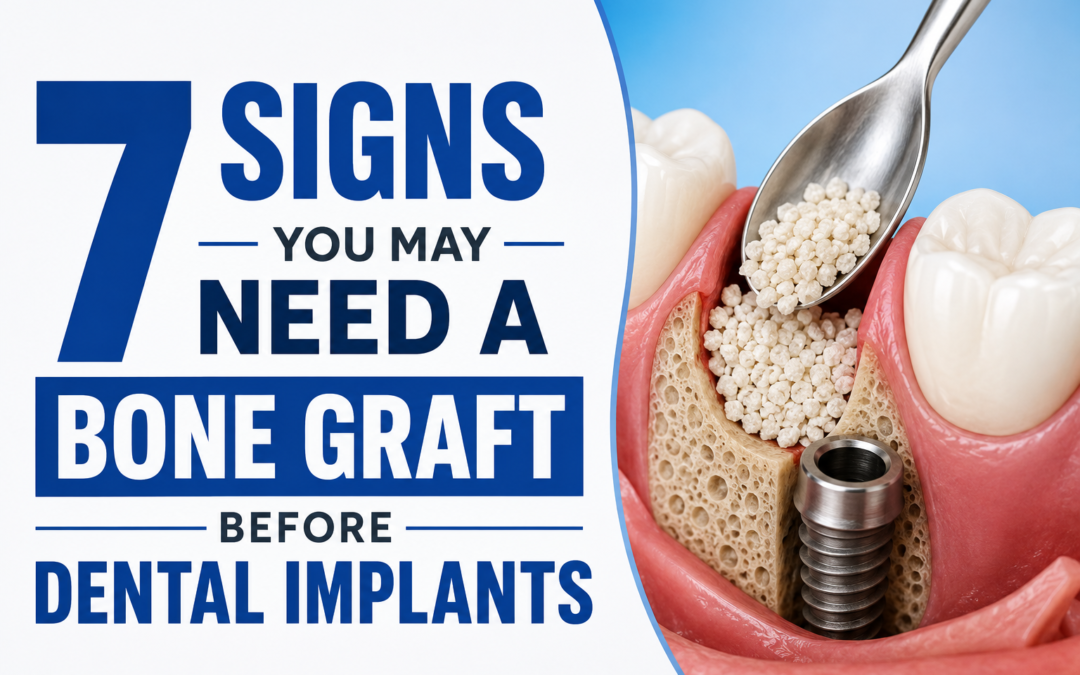
A bone graft before dental implants may be recommended when there isn’t enough healthy jawbone to properly support an implant. Bone loss can occur after tooth loss, gum disease, trauma, or infection. Your dentist can use an examination and dental imaging to determine whether grafting is necessary for successful implant placement.
Losing a tooth doesn’t necessarily mean you can’t get a dental implant. However, a dental implant needs adequate bone support to remain stable. When the jawbone has become too thin, short, or weak in the area where an implant is planned, a bone graft may help rebuild the foundation needed for treatment.
Several factors can contribute to jawbone loss, and some patients may not realize they have experienced significant changes until they begin exploring tooth replacement options. If you’re considering dental implants in Bensalem, understanding these potential warning signs can help you know what to discuss during your consultation.
Why Do You Need Enough Bone for a Dental Implant?
A dental implant is placed into the jawbone, where it serves as a foundation for a replacement tooth. The surrounding bone needs to provide adequate support for the implant and allow it to properly integrate during healing.
When a natural tooth is lost, the jawbone in that area no longer receives stimulation from the tooth root. Over time, the bone can gradually decrease in height and width. The amount of bone loss varies from person to person, so having a missing tooth doesn’t automatically mean you’ll need grafting.
A dental examination and appropriate imaging can help your dentist evaluate the available bone and determine whether it can adequately support planned implant treatment.
What Causes Jawbone Loss?
Several conditions and circumstances can contribute to changes in the jawbone, including:
- Missing teeth: Bone can gradually shrink after a tooth is lost.
- Gum disease: Advanced periodontal disease can damage the tissues and bone supporting your teeth.
- Tooth extraction: Bone naturally changes after a tooth is removed.
- Dental trauma: An injury can damage the bone surrounding a tooth.
- Infection: Certain dental infections can affect the bone around a tooth.
- Long-term tooth loss: Extended periods without a tooth can result in changes to the underlying bone.
If you’re looking for ways to replace missing teeth with implants, your dentist will first need to evaluate whether you have enough bone to support the planned restoration.
7 Signs You May Need a Bone Graft Before Dental Implants
Not everyone who has lost a tooth needs a bone graft. However, certain circumstances can make bone grafting more likely to be part of an implant treatment plan.
1. You’ve Been Missing a Tooth for a Long Time
The longer a tooth is missing, the more likely the jawbone in that area is to change. Natural tooth roots stimulate the surrounding bone, and when a tooth is lost, that stimulation is no longer present. Over time, the bone may gradually decrease in height and width.
However, having a missing tooth for several years does not automatically mean you need a bone graft before dental implants. The amount of bone available varies from person to person and depends on factors such as the location of the missing tooth, how long it has been missing, and your overall oral health.
If you’re considering dental implants after living with tooth loss for an extended period, your dentist can evaluate the area and determine whether there is enough bone to support an implant or whether additional bone may be needed.
2. Your Dentist Has Identified Significant Bone Loss
You may need a bone graft in Bensalem if your dentist has already identified insufficient bone in the area where an implant is planned.
Bone loss can affect several aspects of implant placement, including:
- Bone height: There may not be enough vertical bone to accommodate the planned implant.
- Bone width: The jawbone may be too narrow to provide adequate support.
- Bone volume: There may not be enough overall bone to securely position the implant.
- Implant positioning: Limited bone can affect where an implant can safely and effectively be placed.
Dental imaging allows your dentist to evaluate the condition of your jawbone more closely. Depending on your situation, this may involve standard dental X-rays or more detailed three-dimensional imaging.
If the available bone isn’t sufficient, a dental bone graft may be recommended to help create a more suitable foundation before implant placement.
3. You’ve Had Advanced Gum Disease
Gum disease doesn’t only affect the gums. When periodontal disease becomes advanced, it can damage the tissues and bone that support your teeth.
This can be particularly important when you’re considering a bone graft before dental implants, because an implant needs adequate healthy bone and a stable oral environment.
Signs of periodontal problems may include:
- Persistent gum bleeding
- Red or swollen gums
- Gum recession
- Persistent bad breath
- Loose teeth
- Changes in the way your teeth fit together
If you’ve experienced significant gum disease, your dentist may need to address your periodontal health before moving forward with implant treatment. Treating active gum problems can be an important part of preparing your mouth for successful tooth replacement.
Having a history of gum disease doesn’t necessarily mean you can’t receive dental implants. Your dentist will evaluate the condition of your gums and supporting bone to determine the most appropriate treatment plan.
4. You Recently Had a Tooth Extracted
Having a tooth removed doesn’t necessarily mean you’ll need a bone graft before dental implants, but the extraction process can be followed by changes in the surrounding jawbone.
After a tooth is removed, the bone that previously supported its root no longer receives the same stimulation. Over time, the bone can gradually change in shape and volume. If you plan to replace the missing tooth with an implant, your dentist may evaluate the extraction site to determine whether enough bone remains for stable implant placement.
In some situations, socket preservation may be recommended around the time of extraction to help preserve the available bone for future treatment.
5. You Have a History of Dental Trauma or Infection
Previous trauma or infection can affect the bone surrounding a tooth. For example, a significant injury may damage the supporting structures, while a severe dental infection can affect the bone around the affected tooth.
This may become relevant if you’re considering an implant after losing a tooth that was previously injured or infected.
Your dentist may evaluate:
- The amount of healthy bone remaining
- The condition of the surrounding tissues
- Whether an infection has completely resolved
- The location and extent of previous bone damage
- Whether additional bone is needed for implant placement
A history of trauma or infection doesn’t automatically mean you’ll need grafting. However, it can be one factor your dentist considers when developing your treatment plan.
6. Your Dentures Have Become Loose or Uncomfortable
If you’ve worn dentures for a long time and they’ve gradually become loose or less comfortable, changes in the underlying jawbone may be one possible reason.
After tooth loss, the jawbone can gradually lose volume because it no longer receives stimulation from natural tooth roots. As the shape of the jaw changes, dentures that once fit comfortably may become less stable.
You may notice:
- Your dentures move while eating or speaking.
- Certain foods have become difficult to chew.
- Your dentures no longer fit as securely as they once did.
- You experience sore spots or irritation.
- You need to use more adhesive to keep your dentures in place.
If you’re considering dental implants in Bensalem as an alternative to traditional dentures, your dentist will need to assess the available bone. Depending on the amount of bone present, grafting may be recommended before implant treatment.
7. Your Dental Imaging Shows You Don’t Have Enough Bone
Perhaps the clearest indication that you may need a bone graft before dental implants is an evaluation showing that there isn’t enough bone to adequately support the planned implant.
Dental imaging gives your dentist a closer look at the jawbone and helps with treatment planning. Depending on your situation, your dentist may use X-rays or three-dimensional imaging to evaluate the area.
Your dentist may assess:
- Bone height: How much vertical bone is available.
- Bone width: Whether the jaw is wide enough for the implant.
- Bone density: The quality and condition of the available bone.
- Surrounding anatomy: The position of nearby structures that need to be considered during treatment.
If there isn’t enough bone in the ideal location for an implant, bone grafting may help create or preserve the foundation needed for treatment.
What Happens During a Dental Bone Graft?
If your dentist determines that grafting is appropriate, the procedure generally involves adding graft material to an area where additional bone support is needed. The area then needs time to heal before the implant can be placed, depending on your individual treatment plan.
The process may involve:
- Evaluation and planning: Your dentist assesses your jawbone and determines where additional support is needed.
- Preparing the treatment area: The area is carefully prepared for the graft.
- Placing the graft material: Graft material is positioned where additional bone is needed.
- Healing: The area is allowed to heal so new bone can develop and provide a suitable foundation for future implant placement.
The exact bone graft procedure and healing period vary depending on the location and extent of bone loss. Your dentist can explain what to expect based on your specific situation.
How Long After a Bone Graft Can You Get Dental Implants?
The time between a bone graft and dental implant placement varies from patient to patient. The graft needs time to heal and develop enough new bone to provide a stable foundation for the implant.
The timeline can depend on:
- The amount of bone that needs to be rebuilt
- The location of the graft
- The type of grafting procedure performed
- Your individual healing process
- Your overall oral health
Your dentist in Bensalem will monitor the area during follow-up appointments and determine when it is ready for implant placement. In some cases, an implant may be placed at the same time as the graft, while other situations require a separate healing period.
Bone Graft vs. Dental Implant: What’s the Difference?
A bone graft and a dental implant serve different purposes. A bone graft helps improve the foundation, while the implant replaces the root portion of a missing tooth.
| Treatment | Purpose |
| Bone Graft | Adds or preserves bone where additional support may be needed |
| Dental Implant | Replaces the root portion of a missing tooth |
| Dental Crown | Replaces the visible portion of the tooth |
A bone graft before dental implants may therefore be one stage of a larger tooth replacement plan. Not every patient requires grafting, but when bone volume is insufficient, it can help prepare the area for planned implant treatment.
What Is Recovery Like After a Bone Graft?
Some soreness, swelling, or tenderness can be expected after a bone graft. Your dentist will provide specific instructions based on the procedure you receive.
Tips for a Smooth Recovery
- Follow your dentist’s aftercare instructions carefully.
- Eat soft foods as recommended.
- Avoid chewing directly on the treatment area.
- Keep your mouth clean according to your dentist’s instructions.
- Avoid smoking and tobacco products.
- Take medications as directed.
- Attend all recommended follow-up appointments.
It’s also important not to judge the success of the graft based solely on how the area feels. The graft needs time to heal beneath the surface, and your dentist may use follow-up examinations or imaging to assess the progress.
Can You Get Dental Implants Without a Bone Graft?
Yes. Not everyone who needs a dental implant requires bone grafting first.
If you have sufficient bone height, width, and quality in the planned implant area, your dentist may be able to proceed without a graft. However, patients with significant bone loss may need additional support before an implant can be placed safely and predictably.
That’s why an evaluation is an important first step. Your dentist can assess your jawbone and determine whether grafting is necessary based on your individual anatomy and treatment goals.
When Should You Talk to a Dentist About Bone Grafting?
If you’ve been missing a tooth, recently had an extraction, experienced gum disease, or have been told that you don’t have enough bone for an implant, it’s worth discussing your options with a dental professional.
Patients considering bone grafting in Bensalem can benefit from an individualized evaluation rather than assuming they will or won’t need a graft. Your dentist can examine the area, review appropriate imaging, and explain the treatment options available to you.
Whether you need a bone graft, an implant, or another tooth replacement solution, understanding your options can help you make a more informed decision about your smile.
Build a Strong Foundation for Your New Smile
If you’ve been told you may not have enough bone for a dental implant, you may still have options for replacing your missing tooth. Bone grafting can help create or preserve the foundation needed for implant treatment in appropriate cases.
At Create Ideal Smile, your dental team can evaluate your oral health and jawbone, discuss your treatment options, and develop a personalized plan based on your needs.
If you’re exploring dental implants in Bensalem or have questions about whether you may need a bone graft first, schedule a consultation to take the next step toward restoring your smile.
Frequently Asked Questions
1. What is a bone graft for dental implants?
A dental bone graft adds or preserves bone in an area where there may not be enough healthy bone to adequately support an implant. It may be recommended as part of an implant treatment plan.
2. How do I know if I need a bone graft before dental implants?
Your dentist can determine whether grafting is necessary by evaluating your oral health and the amount of available jawbone. Dental imaging may also be used to assess bone height and width.
3. Why does tooth loss cause bone loss?
When a natural tooth is lost, the jawbone no longer receives stimulation from its root. Over time, the bone in that area can gradually change in volume and shape.
4. Is a dental bone graft painful?
The procedure is performed with anesthesia to keep you comfortable. Some soreness, swelling, or tenderness can occur afterward as the area heals.
5. How long does a bone graft take to heal?
Healing time varies based on the type and extent of grafting, the location of the treatment, and your individual healing process. Your dentist will determine when the area is ready for the next stage of treatment.
6. How long after a bone graft can I get dental implants?
The timing varies. Some implants can be placed at the same time as grafting, while other cases require the graft to heal before implant placement. Your dentist will determine the appropriate timeline for you.
7. Can I get dental implants without a bone graft?
Yes. If you already have sufficient bone to support an implant, grafting may not be necessary. An examination and appropriate imaging can determine whether you have adequate bone.
8. What happens if I don’t have enough bone for a dental implant?
Your dentist may recommend bone grafting or another treatment approach to improve the available support. The appropriate option depends on the amount and location of bone loss.
9. What can I eat after a dental bone graft?
Your dentist may recommend soft foods that don’t require significant chewing during the initial recovery period. Follow the specific dietary instructions provided after your procedure.
10. How successful are bone grafts for dental implants?
Bone grafting can be an effective way to improve bone support for planned implant treatment. The outcome depends on factors such as the type and extent of bone loss, oral health, healing, and following post-treatment instructions.